Leave Your Message

How to Choose the Right Condenser Fan?

Choosing the right Condenser Fan can improve cooling performance, reduce energy waste, and protect expensive refrigeration equipment. Yet the decision is rarely as simple as matching a fan to a cabinet size. Airflow, motor efficiency, operating temperature, noise, and installation space all influence the final result. A fan that looks powerful in a product listing may perform poorly when dust blocks its guard or when airflow meets a restrictive condenser coil.

Practical selection begins with the equipment’s actual working conditions. Check the required airflow, static pressure, voltage, frequency, mounting pattern, and fan diameter. Confirm that the motor can tolerate the surrounding temperature, especially near commercial refrigeration systems or outdoor condensing units. A reliable supplier should provide performance curves, electrical data, noise ratings, and clear warranty terms. These details matter more than attractive marketing language.

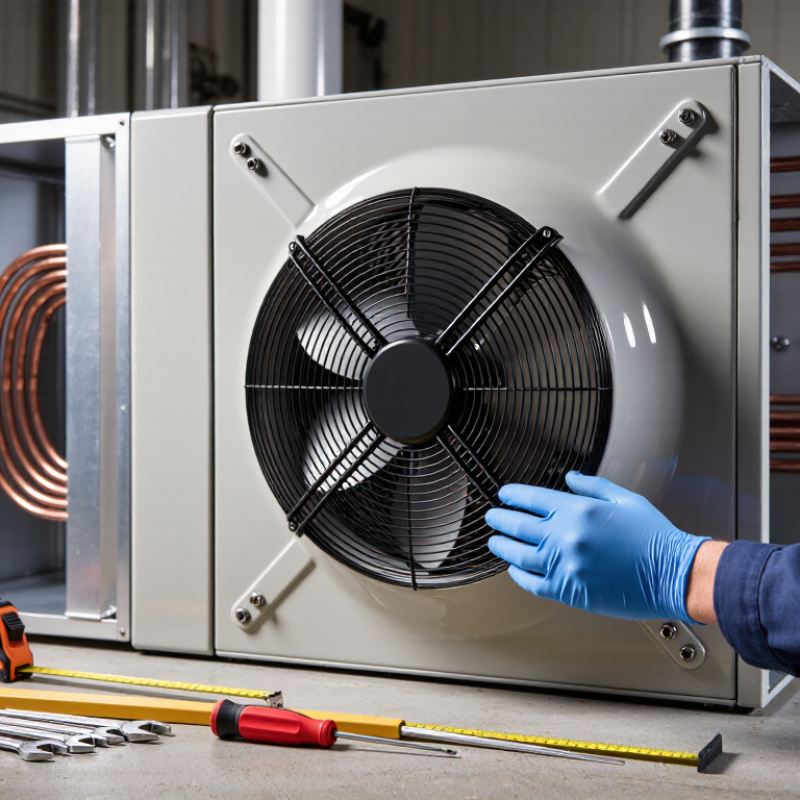
Field experience also reveals small problems that specifications can miss. Measure the available clearance with a tape, not by estimation. Listen for vibration after installation. Inspect the coil, fan blade, and protective grille during routine maintenance. Even a correctly rated fan may fail early if dirt, moisture, or unstable voltage remains unaddressed. I have seen selections based only on airflow numbers create unnecessary noise and weak cooling. That shortcut deserves reconsideration.

The best choice balances performance, durability, serviceability, and total operating cost. By comparing verified data with real site conditions, readers can choose a Condenser Fan with greater confidence and fewer expensive surprises.
How to Choose the Right Condenser Fan?

Condenser Fan Basics and Its Role in Cooling Systems

A condenser fan removes heat from the refrigerant through the outdoor coil. It pulls ambient air across metal fins, then releases warmer air around the unit. This airflow keeps condensing pressure within a workable range. Without it, cooling capacity can fall, energy use can rise, and compressor stress may increase.

The International Energy Agency reports that space cooling uses nearly 10% of global electricity. Its Future of Cooling analysis also projects cooling demand could triple by 2050. These figures make fan selection more than a maintenance detail. Check the required airflow, static pressure, voltage, phase, rotation, and operating temperature. A fan with higher airflow is not always better. Excessive airflow can increase noise and motor consumption. Confirm the coil’s design data before choosing a replacement.

Field inspections often reveal blocked fins, incorrect rotation, loose wiring, or a failing capacitor. I have also seen clean coils paired with undersized fans. The result looked acceptable, but head pressure remained high during hot afternoons. Measure airflow and compare operating current with the equipment specification. Review sound levels if the unit serves homes, hotels, or offices. Choose sealed bearings and suitable weather protection for exposed installations. One detail is easy to miss: the fan must start reliably at the lowest expected voltage. The U.S. Department of Energy identifies air conditioning as roughly 6% of household electricity use in the United States. Better condenser airflow can support efficiency, but it cannot correct poor system charging or restricted refrigerant flow. That distinction deserves attention.
Match the Fan Type to Your Condenser Design

How to Choose the Right Condenser Fan?

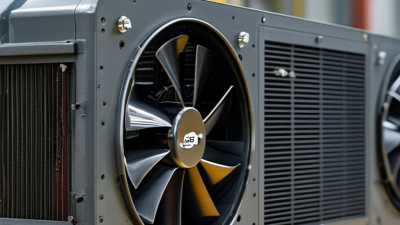
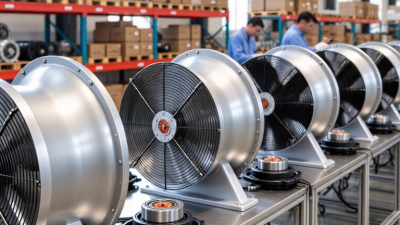
Match the fan type to your condenser design, not just its airflow rating. Axial fans suit open condenser coils with low static pressure. They move large air volumes efficiently through short paths. Centrifugal fans work better when air must travel through ducts, filters, or sound-attenuating sections. Their stronger pressure capability supports more resistant systems. Check the required airflow, static pressure, coil depth, and discharge direction together.

Installation details matter. A rooftop condenser may need a weather-resistant motor, stable mounting, and controlled vibration. In a tight plant room, a centrifugal fan can direct warm air away from the workspace. An axial fan may be simpler outdoors, but poor clearance can recycle hot discharge air. This raises condensing pressure. It also reduces efficiency. In field inspections, I have seen fans selected by diameter alone. That shortcut often creates noise, overheating, or weak cooling. Recheck the design under the hottest expected conditions.

Tips: Measure airflow and static pressure at the same operating point. Leave enough clearance around the inlet and outlet. Compare sound levels at the nearest occupied area. Confirm the motor suits the supply, duty cycle, and weather exposure. Use speed control only when the condenser and motor support it. Record actual temperature and pressure readings after commissioning. Small details matter.

Calculate Airflow, Pressure, and Motor Requirements

How to Choose the Right Condenser Fan?

Calculate Airflow, Pressure, and Motor Requirements

Start with the condenser’s heat rejection load, not the fan size. In imperial units, estimate airflow with CFM = Q ÷ (1.08 × ΔT). Q is the sensible heat load in Btu per hour. For a refrigeration system, include compressor input and refrigerant heat, not only the room load. A 36,000 Btu/h condenser with a 20°F temperature rise needs roughly 1,667 CFM. This is only an estimate. Outdoor temperature, coil spacing, and recirculated air can change the result.

Next, calculate external static pressure. Add pressure losses from the coil, guard, grille, duct, and nearby obstructions. Use the fan curve at the actual operating point, rather than choosing the maximum airflow number. A fan delivering 2,000 CFM at zero pressure may provide far less airflow through a dirty coil. I have seen undersized motors overheat because pressure losses were ignored. That mistake is expensive, and surprisingly common.

Tips:

Measure coil dimensions and record the design outdoor temperature. Keep airflow uniform across the coil. Check the fan curve at the required CFM and static pressure. For motor power, use horsepower = CFM × pressure ÷ (6356 × efficiency). Select a motor with a modest service margin, then verify voltage, phase, RPM, noise, and enclosure rating. A larger motor is not automatically safer. It may waste energy, increase noise, and still fail if the airflow direction is wrong.

Check Size, Noise, Energy Use, and Installation Conditions

Choosing a condenser fan starts with size, not appearance. Match the fan’s airflow, voltage, diameter, and motor capacity with the condenser coil and compressor. An oversized fan may waste electricity and create excessive drafts. An undersized fan can raise head pressure during a hot afternoon. The U.S. Department of Energy advises checking rated operating conditions, airflow, and electrical compatibility before replacement.

Noise also deserves measurement. Look for the sound rating in sones or decibels, then consider nearby bedrooms, offices, and property lines. A fan with efficient controls can reduce speed during mild weather. This matters as cooling demand grows. The International Energy Agency reported that global cooling energy use more than tripled between 1990 and 2016. Small motor savings become significant across many operating hours. My practical mistake was focusing only on wattage. Lower wattage did not help when poor airflow extended compressor runtime.

Tips: Measure the available clearance first. Keep leaves away from the coil. Verify airflow direction. Check for vibration after installation. Use a weather-resistant electrical connection. If the unit sits beside a wall, allow the manufacturer’s required discharge space; restricted airflow can increase noise and energy use. Installation conditions are easy to underestimate. Roof heat, salt air, dust, and frequent cycling can change the correct choice. Record the old fan’s voltage and rotation before ordering, because labels can be confusing.

How to Choose the Right Condenser Fan?

Check size, noise, energy use, and installation conditions before selecting a condenser fan.

Nominal Fan Size Typical Airflow Typical Sound Level Typical Input Power Suggested Service Clearance
300 mm 1,800 m³/h 52 dB(A) 90 W 150 mm
400 mm 3,500 m³/h 58 dB(A) 160 W 200 mm
500 mm 6,000 m³/h 64 dB(A) 220 W 250 mm
630 mm 9,500 m³/h 70 dB(A) 400 W 315 mm

These are representative values for common axial condenser fan sizes. Choose a fan that meets the required heat-rejection airflow without exceeding the available noise or power limits. Confirm the exact airflow at the system’s static pressure, check the available mounting space and service clearance, and verify voltage, protection rating, ambient temperature, and guard requirements before installation.

Compare Materials, Controls, Reliability, and Maintenance Needs

Choosing the right condenser fan starts with the environment, not the catalog photograph. In field inspections, galvanized steel often suits dry indoor equipment, while coated steel or aluminum handles moisture better. Aluminum resists corrosion and reduces weight, but its softer surface can suffer from impact. Plastic housings may limit corrosion, yet heat and ultraviolet exposure can shorten their service life. Check operating temperature, humidity, salt exposure, and airflow resistance before comparing materials. A fan that looks efficient on paper may struggle when coils become dusty.

Controls should match the system’s operating pattern. Variable-speed control can reduce noise and energy use during light loads. However, poor sensor placement may cause hunting, frequent speed changes, and premature motor wear. Confirm voltage, overload protection, wiring access, and compatibility with the condenser’s control logic. Reliability also depends on bearings, motor insulation, guards, and vibration balance. Ask for test data, service records, and expected operating hours. I have seen a durable fan fail early because a loose mounting bracket transmitted vibration through the frame.

Tips: Leave clearance for cleaning and motor replacement. Inspect blades, guards, terminals, and drain paths during scheduled service. Remove dust before it hardens on the blades. Record unusual noise, rising current, or slower startup. Do not ignore small changes. They often appear before a costly failure. Maintenance intervals should reflect the site, not a generic calendar. A dusty workshop needs closer checks than a clean mechanical room. When evidence is limited, choose the easier-to-service design and document that decision.

How to Choose the Right Condenser Fan? - Compare Materials, Controls, Reliability, and Maintenance Needs

Fan Option Typical Materials Control Compatibility Reliability Considerations Maintenance Needs Best-Suited Applications
AC Axial Fan Galvanized steel, aluminum, or coated steel frame; aluminum or reinforced polymer blades Single-phase or three-phase AC supply; compatible with on/off contactors and, where motor-rated, voltage or frequency control Simple electrical design and broad availability; reliability depends on motor insulation, bearing quality, thermal protection, and weather sealing Clean blades and guards, inspect wiring and terminals, check bearing noise and vibration, and verify motor protection Standard air-cooled condensers, rooftop units, commercial refrigeration, and general outdoor heat rejection
EC Axial Fan Aluminum or galvanized steel structure; composite or aluminum impeller; integrated electronic motor housing Usually accepts a low-voltage analog signal, such as 0–10 V, or a digital control input; some models provide speed feedback and alarms High part-load efficiency and soft starting; electronic components require suitable protection from heat, moisture, voltage disturbances, and electromagnetic interference Keep electronics and air passages clean, inspect connectors, confirm control-signal stability, and review fault indications Variable-load systems, energy-conscious commercial equipment, low-noise installations, and applications requiring automatic speed modulation
Permanent-Split Capacitor Motor Fan Steel motor shell, copper windings, aluminum or steel fan blade, and a separate run capacitor Well suited to fixed-speed switching; speed control requires a motor-compatible controller and must follow the motor manufacturer’s limits Mature and cost-effective design; the capacitor, bearings, and thermal protector are common service points Inspect capacitor condition, clean the impeller, check current draw, and monitor unusual hum, overheating, or vibration Fixed-speed condenser fans and systems where straightforward replacement and low initial cost are priorities
Direct-Drive Fan Motor shaft coupled directly to an aluminum, steel, or composite impeller; no belt or pulley assembly Supports fixed-speed control and, when motor-compatible, electronic speed regulation Fewer wear components and no belt-slip losses; correct alignment, impeller balance, and motor sizing remain important No belt replacement; clean the fan, inspect shaft and bearings, tighten mounting hardware, and check vibration periodically Compact condenser assemblies and equipment where low routine maintenance is important
Belt-Drive Fan Steel or aluminum frame, steel shaft, sheaves, and elastomeric belt; blade material varies by design Convenient for mechanical speed adjustment through sheave selection; electrical control depends on the motor type Can accommodate larger airflow requirements; belt wear, misalignment, tension, and bearing loads affect operating reliability Inspect belt tension and wear, align sheaves, lubricate serviceable bearings, clean the drive, and verify guards are secure Larger systems, installations needing adjustable fan speed, and equipment where motor access is separated from the airflow path
Corrosion-Resistant Fan Stainless steel, aluminum, fiberglass-reinforced plastic, or coated components selected for the exposure level Available with AC or EC motors; control selection should consider enclosure rating, signal wiring, and the corrosive environment Improved resistance to salt, chemicals, and humidity when the material and coating are correctly matched; dissimilar-metal contact may cause galvanic corrosion Rinse or clean deposits according to site procedures, inspect coatings and fasteners, and check drainage and seals Coastal locations, food-processing areas, wastewater facilities, chemical environments, and high-humidity installations
Selection note: Confirm airflow, static pressure, voltage, phase, ambient temperature, sound level, ingress protection, mounting dimensions, and required control signal before choosing a condenser fan. Always follow the applicable motor and equipment installation instructions.