

Choosing a reliable Fan Motor For Ac Unit manufacturer in China requires more than comparing prices. Performance, safety, production consistency, and after-sales support all influence the final result. A motor may look suitable in a catalog, yet behave differently under high humidity, voltage changes, or continuous summer operation.
China has a broad supplier base, including specialized motor factories, HVAC component producers, and large electrical equipment manufacturers. Some companies focus on compact condenser fan motors, while others provide customized solutions for residential, commercial, and industrial air-conditioning systems. Their product ranges may include AC motors, EC motors, shaded-pole motors, and external rotor designs. Each type offers different advantages in efficiency, noise control, installation, and service life.
Details matter.
A serious evaluation should examine factory experience, certifications, winding quality, bearing selection, thermal protection, and testing procedures. It should also consider whether the manufacturer supports sample testing, OEM development, stable batch production, and clear technical communication. Site audits, test reports, and customer references can reveal more than polished marketing materials. However, public information is not always complete, and rankings can change as factories expand, merge, or improve their capabilities.
This guide introduces ten notable Chinese manufacturers connected with Fan Motor For Ac Unit production. The selection considers technical expertise, manufacturing capacity, product reliability, export experience, and market reputation. It is not a permanent verdict. Buyers should still verify current certifications, specifications, and delivery performance before placing orders. A practical comparison may prevent expensive replacement work later.
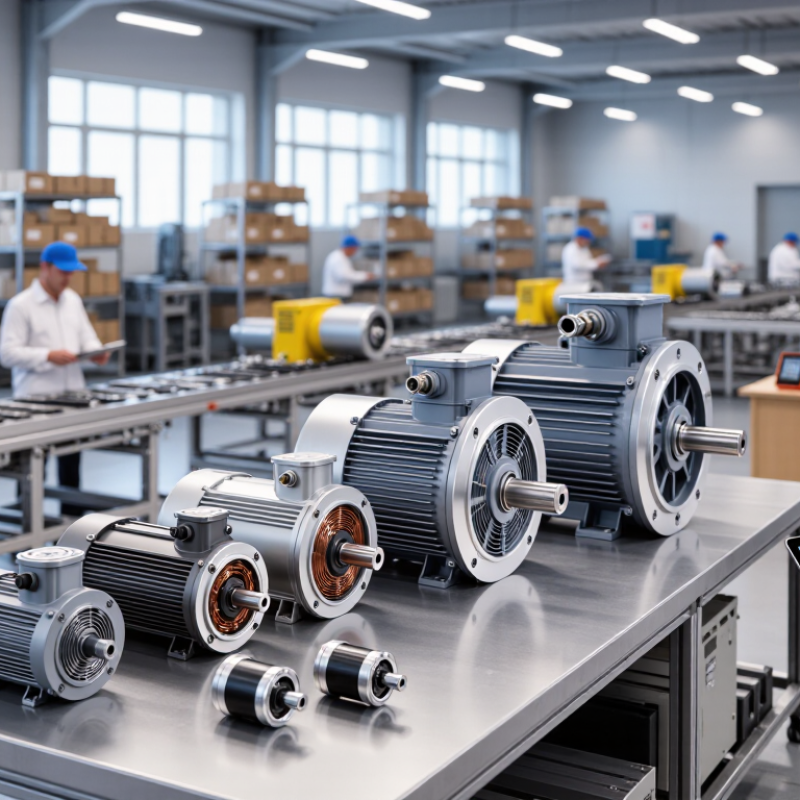
An AC unit fan motor drives the indoor or outdoor fan, moving air across coils and through the room. This airflow transfers heat, controls comfort, and protects the compressor from excessive pressure. A weak motor may cause poor cooling, uneven temperatures, or unusual humming sounds. It can also raise energy use when the fan struggles against resistance.
Common options include alternating-current motors and electronically commutated motors. Their performance depends on speed control, torque, voltage, insulation, and bearing quality. Technicians should match the motor’s rotation, shaft size, mounting pattern, and rated airflow. A motor that physically fits may still perform badly. Sound levels matter too, especially in bedrooms or small offices. In practice, the “best” motor is not always the most efficient one. Installation conditions, coil cleanliness, and duct pressure can change results.
When comparing China’s top fan motor manufacturers, do not rely on rankings alone. Check their experience with your AC unit type, voltage, frequency, and installation space. A qualified supplier should provide clear motor curves, rated power, insulation class, noise data, and expected service life. Ask for recent test reports and production samples. A factory that explains its limits is often more reliable than one promising everything.
Inspect the manufacturing process, not only the finished motor. Review winding equipment, balancing procedures, bearing selection, and final inspection records. Request a sample run under real conditions, such as 220–240 volts, continuous operation, and restricted airflow. Measure temperature rise, vibration, and sound near the fan housing. Certifications matter, but traceability matters too. Each batch should connect to production dates, materials, and test results. No evaluation is perfect. My own checks can miss hidden assembly issues.
Tips: Compare at least three suppliers using the same specification sheet. Ask how rejected motors are handled. Confirm spare-part support and response times in writing. Visit the factory when possible, but remember that one clean production line proves little. A lower price may reduce bearing quality or inspection depth. That risk deserves careful questioning.
China’s Top 10 AC Unit Fan Motor Manufacturers are increasingly judged by efficiency, durability, and production consistency. The International Energy Agency reports that space-cooling electricity demand could more than triple by 2050. That pressure is changing motor design in Chinese factories.
The leading manufacturers typically supply shaded-pole, PSC, BLDC, and EC motors for split, rooftop, and packaged air-conditioning units. Their strongest factories show automated winding lines, balanced rotors, thermal protection, and traceable testing records. In practical audits, buyers should inspect vibration at operating speed, bearing noise, insulation resistance, and performance after repeated thermal cycling. A quiet sample is not enough.
Market reports from Grand View Research identify energy efficiency and variable-speed systems as major HVAC motor growth drivers. This supports demand for electronically commutated motors, especially in high-efficiency indoor and outdoor units. However, rankings can be imperfect. Some suppliers publish capacity figures, while others disclose only export value or annual output. That makes direct comparison difficult.
A credible top-ten list should therefore combine shipment volume, export experience, certification coverage, customization ability, and after-sales response. Factory visits remain useful. Look closely at winding tension, connector sealing, and final inspection records. Small defects become expensive after thousands of motors enter service. Data matters. Field evidence matters more.
Choosing the top 10 fan motor manufacturers for AC units requires more than checking price or rated wattage. Product comparisons should examine PSC, EC, and variable-speed motors, plus airflow, noise, vibration, thermal protection, and service life. The IEA’s The Future of Cooling report states that global space-cooling electricity demand could more than triple by 2050, reaching about 6,200 TWh. Efficiency is therefore a practical purchasing issue, not a marketing phrase.
Technology must match the application. EC motors can provide precise speed control, while PSC designs may remain attractive for simpler replacement markets. Reviewers should request measured efficiency curves, locked-rotor current, insulation class, IP protection, and operating-temperature data. Certifications also matter. ISO 9001 supports process consistency, while IEC 60335-2-40 and IEC 60034 test frameworks help assess appliance safety and motor performance. However, certificates do not replace factory audits. A polished document can still hide weak batch control. That is an uncomfortable point, but buyers should test samples independently.
Tips: Compare at least three production samples, not one. Check serial-number traceability, bearing noise, shaft alignment, and start-up behavior under low voltage. Ask about warranty response times, spare-parts availability, firmware support for smart controllers, and regional repair capacity. Service quality often decides downtime costs. Some suppliers promise fast delivery, yet hold limited inventory. Confirm lead times in writing and review recent failure data when available.
Comparing Products, Technologies, Certifications, and Services
This chart presents a neutral evaluation framework rather than company-specific performance data. The comparison dimensions reflect commonly reviewed requirements for AC fan motors, including PSC and BLDC/EC motor technologies, rated voltage and frequency, variable-speed control, thermal protection, quality and environmental management systems, electrical safety standards, RoHS compliance, customization, sample testing, warranty, and after-sales support.
Choosing a fan motor manufacturer for an AC project requires more than comparing prices. China’s top ten suppliers may offer similar specifications, yet their production control can differ considerably. Check motor efficiency, rated voltage, noise level, insulation grade, and operating temperature. These details affect performance inside a crowded outdoor unit.
Ask each manufacturer for test reports, sample units, and production references from comparable AC systems. A reliable supplier should explain bearing life, winding materials, balancing procedures, and protection against moisture. Request a sample before approving mass production. Measure vibration with the fan installed, not only on a workbench. Small installation differences can expose serious problems. Certification documents matter, but they should match the exact motor model. Generic paperwork is not enough.
Tips: Compare at least three factories. Review factory audit records. Confirm tooling ownership and delivery capacity. Discuss failure analysis before signing. Define warranty terms clearly, including replacement time and evidence requirements.
Communication also deserves careful attention. A technically strong factory may still struggle with drawings, change control, or English instructions. Use a detailed specification sheet with drawings, tolerances, connectors, and inspection points. Keep approved samples sealed and traceable. No checklist is perfect. I would still allow time for redesign, because an apparently minor shaft-length issue can delay an entire AC assembly line. Evaluate the manufacturer’s response to difficult questions; honest limitations are often safer than confident promises.
Anonymous industry-reference profiles for comparing AC fan motor manufacturing capabilities. Specifications are typical market ranges and should be verified through technical documents, samples, and factory audits.
| Reference Profile | Primary Motor Types | Typical Rated Power | Common Voltage / Frequency | Speed-Control Options | Typical Protection | Production & Testing Strength | Indicative MOQ | Sample Lead Time | Best Fit for AC Projects |
|---|---|---|---|---|---|---|---|---|---|
| Profile 01 | Shaded-pole, PSC | 10–60 W | 100–240 V AC; 50/60 Hz | Single-speed, multi-speed taps | Thermal protector; Class B or F insulation | High-volume winding and rotor assembly; routine hipot and no-load testing | 500–1,000 units | 2–4 weeks | Residential evaporator and condenser fan applications |
| Profile 02 | PSC capacitor motor | 25–120 W | 110–277 V AC; 50/60 Hz | Multi-speed, voltage control | Thermal overload; Class F insulation; IP20–IP44 housing options | Standardized stator tooling; winding resistance and vibration checks | 300–800 units | 3–5 weeks | Split-system indoor and outdoor fan units |
| Profile 03 | EC external-rotor motor | 30–250 W | 85–305 V AC/DC input | 0–10 V, PWM, potentiometer | Electronic current limit; over-temperature protection; IP44–IP55 | Controller integration; efficiency mapping and EMC pre-compliance testing | 100–500 units | 4–7 weeks | Energy-efficient air handlers and commercial HVAC equipment |
| Profile 04 | BLDC internal-rotor motor | 20–180 W | 12–48 V DC or integrated AC input | PWM, UART, analog signal | Locked-rotor, over-voltage, under-voltage, and thermal protection | Firmware parameterization; speed, torque, and acoustic testing | 100–300 units | 5–8 weeks | Variable-speed residential systems and compact air-conditioning equipment |
| Profile 05 | External-rotor AC motor | 60–500 W | 115–460 V AC; 50/60 Hz | Three-speed, voltage controller | Thermal switch; Class F or H insulation; IP44–IP54 | Fan-wheel balancing; airflow, noise, and temperature-rise testing | 200–600 units | 4–6 weeks | Rooftop units, air curtains, and packaged HVAC systems |
| Profile 06 | High-efficiency PSC motor | 40–300 W | 200–240 V or 380–415 V AC; 50/60 Hz | Multi-speed, phase-angle control where applicable | Thermal protector; Class F insulation; optional IP55 construction | Efficiency-focused lamination and copper optimization; endurance testing | 500–1,500 units | 4–6 weeks | Projects prioritizing operating cost and long service life |
| Profile 07 | Low-noise fan motor | 15–150 W | 100–240 V AC; 50/60 Hz | Multi-speed or continuous electronic control | Thermal protection; precision bearings; vibration-isolated mounting | Rotor balancing, acoustic chamber testing, and bearing-life validation | 200–500 units | 4–7 weeks | Bedrooms, offices, hotels, and other noise-sensitive environments |
| Profile 08 | Heavy-duty condenser fan motor | 80–750 W | 115–460 V AC; 50/60 Hz | Single-speed, dual-speed, voltage control | Class F or H insulation; IP54–IP65; corrosion-resistant options | High-temperature operation, salt-spray options, and extended endurance tests | 100–500 units | 5–8 weeks | Outdoor condensers, heat pumps, and harsh-environment installations |
| Profile 09 | Customized OEM fan motor | 20–1,000 W | Application-specific AC or DC input | Programmable control, tachometer, Hall feedback | Customized thermal, electrical, and ingress protection | Design engineering, prototype tooling, validation reports, and PPAP-style documentation | 100–300 units after approval | 6–12 weeks | New AC platforms requiring unique dimensions or controls |
| Profile 10 | Export-oriented HVAC motor supplier | 30–800 W | 100–480 V AC; 50/60 Hz; DC options | Multi-speed, 0–10 V, PWM, and inverter-compatible options | Thermal protection; Class F/H insulation; IP44–IP65 options | Multi-market documentation, traceability, routine safety testing, and packaging control | 300–1,000 units | 4–8 weeks | Importers and OEMs serving multiple voltage and compliance markets |