Best Desiccant Filter Options at 2026 Canton Fair?
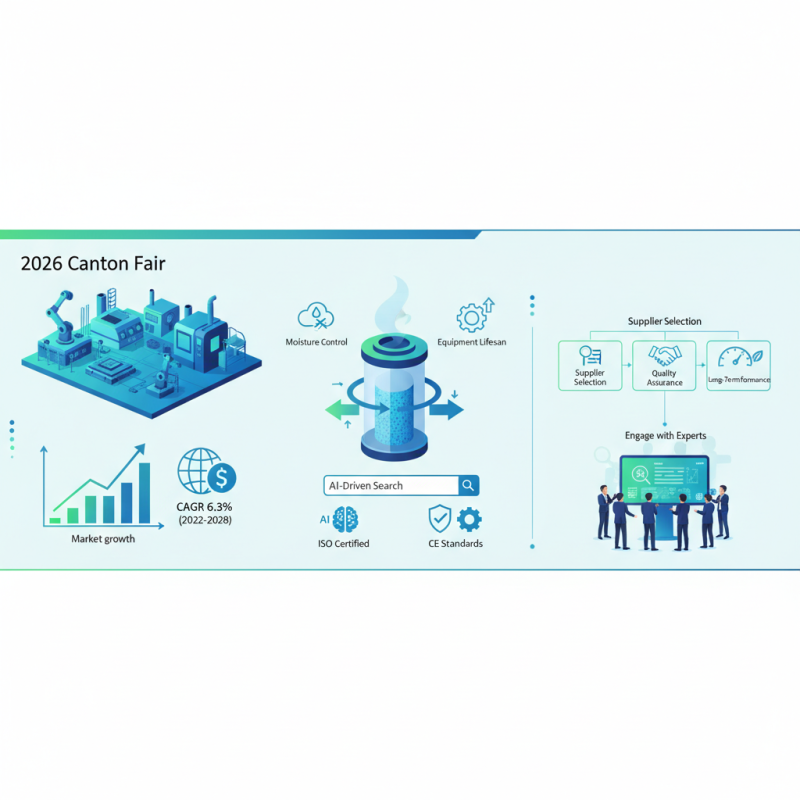
The 2026 Canton Fair promises to highlight innovative solutions across various sectors, particularly in the realm of advanced manufacturing and electronic appliances. Among the key products showcased will be Desiccant Filters, which play a crucial role in maintaining air quality and extending equipment lifespan. According to recent industry reports, the global desiccant market is expected to grow at a CAGR of 6.3% from 2022 to 2028.
As businesses strive for efficiency, Desiccant Filters have proven essential in moisture control. They help reduce degradation in sensitive equipment, which can significantly impact operational costs. However, sourcing high-quality filters remains a challenge. Therefore, the introduction of AI-driven search tools at the Canton Fair will enable buyers to quickly find certified suppliers, such as those meeting ISO and CE standards. This innovation is set to enhance decision-making, critical for businesses facing increasing pressure for compliance and sustainability.
Despite these advancements, companies must reflect on their choices. Not all suppliers offer equal quality, which can lead to operational setbacks. The 2026 Canton Fair offers an opportunity to address these concerns while showcasing the best options for Desiccant Filters. Thus, engaging with experts at the fair can lead to informed choices that benefit long-term performance and reliability.
Overview of Desiccant Filters Available at the 2026 Canton Fair
At the 2026 Canton Fair, desiccant filters are showing great variety. These filters are crucial for moisture control in various settings. Many manufacturers are showcasing options suitable for both industrial and residential applications. The designs vary, yet each aims to improve air quality and protect sensitive equipment.
Some filters use advanced materials for better moisture absorption. These filters can be compact or large, depending on user needs. While some options provide strong performance, others may not meet all expectations. Visitors may find inconsistencies in effectiveness, and user reviews will be vital. Many promising products exist, but careful choices are essential.
Not all desiccant filters fit every environment. Understanding specific needs is critical before making a purchase. Attendees should also consider installation and maintenance costs. Exploring multiple vendors will reveal both high-end and budget-friendly solutions. This fair offers a unique opportunity to compare and contrast products.
Key Features to Consider When Choosing a Desiccant Filter
When selecting a desiccant filter, several key features play a crucial role. One of the most important aspects is the filter's adsorption capacity. A report by Global Market Insights indicates that filters with a higher adsorption efficiency can enhance moisture control by up to 30%. This efficiency can significantly reduce corrosion and improve product lifespan.
Another essential feature is the regeneration method. Some filters offer heat regeneration, while others utilize pressure swing adsorption. The right choice depends on the application environment. Efficient regeneration can lead to reduced operational costs. Research indicates that filters with effective regeneration can retain performance for over a year. However, some users may underestimate maintenance needs.
Size and installation flexibility also factor in. Many users prefer compact designs that can fit into tight spaces. A study highlighted that the market for small desiccant filters is growing, with a 25% increase in demand in recent years. However, it’s easy to overlook how space affects performance. Adequate airflow is critical for optimal function. Hence, careful consideration is necessary during the selection process.
Top Brands Showcased at the 2026 Canton Fair for Desiccant Filters
The 2026 Canton Fair showcases a variety of innovative desiccant filters. These filters play a crucial role in moisture control across many industries. Reports indicate that the global desiccant market is expected to grow by 6% annually. This rise highlights the importance of effective moisture management.
Several leading manufacturers present their latest technology. They emphasize energy efficiency and performance. Product designs focus on maximizing airflow while reducing energy consumption. Attendees can observe various filtration materials used, from silica gel to molecular sieves. Each choice has its distinct advantages and applications.
The fair brings attention to emerging trends, such as eco-friendly options. Sustainability is becoming a significant factor in purchasing decisions. However, challenges remain in balancing cost and effectiveness. Many companies express the need for more rigorous testing and data before fully committing to new technologies. This highlights an ongoing conversation in the industry about innovation versus practical application.
Comparative Analysis of Desiccant Filters: Performance and Pricing
When examining the performance of desiccant filters, it’s essential to consider several key metrics. A recent report indicates that desiccant filters can achieve up to 90% moisture removal efficiency. This figure highlights their effectiveness in various applications, from industrial processes to climate control systems. However, not all filters perform equally. Some demonstrate reduced efficiency at lower temperatures, which affects their overall reliability.
Pricing is another critical aspect of the comparative analysis. According to industry data, the average cost of high-performance desiccant filters ranges from $50 to $150. Some premium options might exceed this range. It’s crucial to balance cost with performance. In some cases, choosing a less expensive filter leads to higher maintenance costs. An examination of user feedback reveals that while affordability is attractive, durability and performance often outweigh the initial price tag.
Furthermore, many users express concerns over the lifespan of desiccant materials. Reports show that some products require replacement every three to six months. This frequent need for change can lead to unexpected expenses. Users must weigh these factors carefully. The right choice depends not only on budget but also on specific operational needs. Exploring diverse options is advisable before finalizing a decision.
Performance Comparison of Desiccant Filters
User Feedback and Reviews on Desiccant Filters from Canton Fair Exhibitors
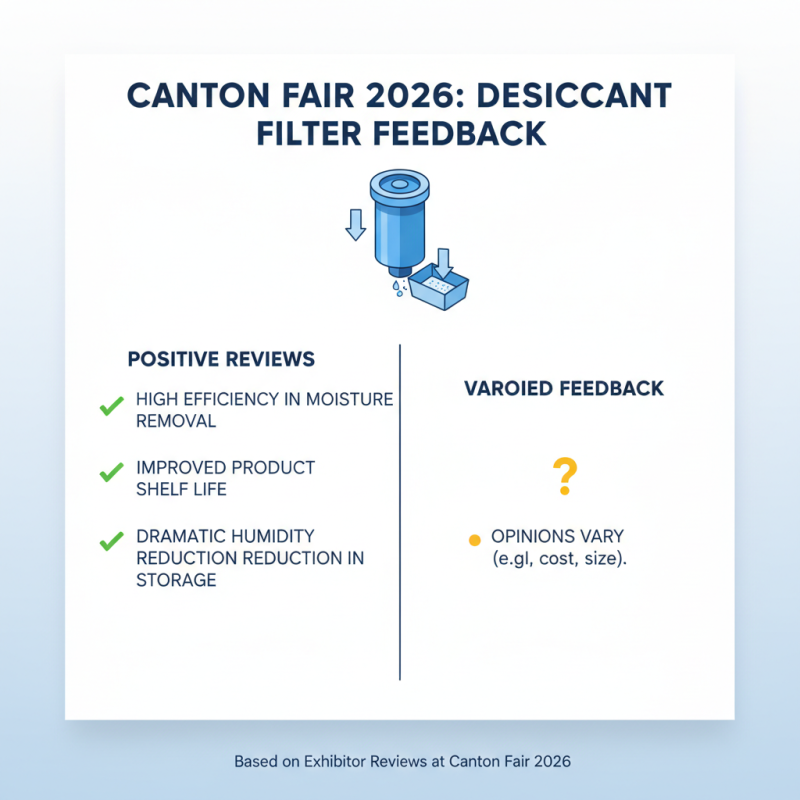
At the 2026 Canton Fair, feedback on desiccant filters varied widely among exhibitors. Many users praised the efficiency of these filters in moisture removal. They reported significant improvements in product shelf life. One exhibitor noted that their desiccant filter reduced humidity levels dramatically in storage areas.
However, not all reviews were positive. Some users expressed concerns about the longevity of certain models. A few filters became less effective in humid conditions, leading to disappointment. One participant even mentioned a need for better instructions on replacement.
Overall, attendees shared insights that highlighted the importance of user experience. Many felt that while some desiccant filters performed well, others fell short. This mixed feedback prompted a conversation about quality standards and reliability in the industry. Improving these aspects could enhance user satisfaction significantly.



 Email
Email Whatsapp
 WeChat