Leave Your Message

Top Filter Dryer Manufacturers for Global Buyers?

Global buyers are reassessing Filter Dryer suppliers as pharmaceutical, chemical, and specialty-material production becomes more quality-driven. Grand View Research and MarketsandMarkets reports identify continuing investment in process equipment, automation, containment, and energy efficiency. These trends matter because a Filter Dryer must do more than separate solids and liquids. It must support washing, drying, discharge, cleaning, and batch traceability inside one controlled vessel.

The best manufacturer depends on the process.

A practical filter-dryer assessment should examine filtration area, agitation design, vacuum performance, drying uniformity, material compatibility, and scale-up evidence. FDA process-validation guidance also reinforces lifecycle control, documented testing, and reproducible performance. That means glossy brochures are not enough. Buyers should request factory acceptance records, product-contact certificates, test data, and references from comparable plants.

Quality expert W. Edwards Deming said, “In God we trust; all others must bring data.” His principle fits this market closely. Yet selecting a global supplier is rarely simple. Delivery history, local service, spare-parts access, and operator training can matter as much as vessel design. A technically strong machine may still disappoint when support is slow.

This guide compares leading Filter Dryer manufacturers through practical criteria, published capabilities, and buyer-focused evidence. Some market reports use different definitions, so their figures should be read carefully. That limitation deserves attention. No single ranking can fit every process. The right choice is the manufacturer that proves dependable performance under your actual solvent, product, pressure, temperature, and cleaning conditions.
Top Filter Dryer Manufacturers for Global Buyers?

Filter Dryer Fundamentals: Integrated Filtration and Vacuum Drying

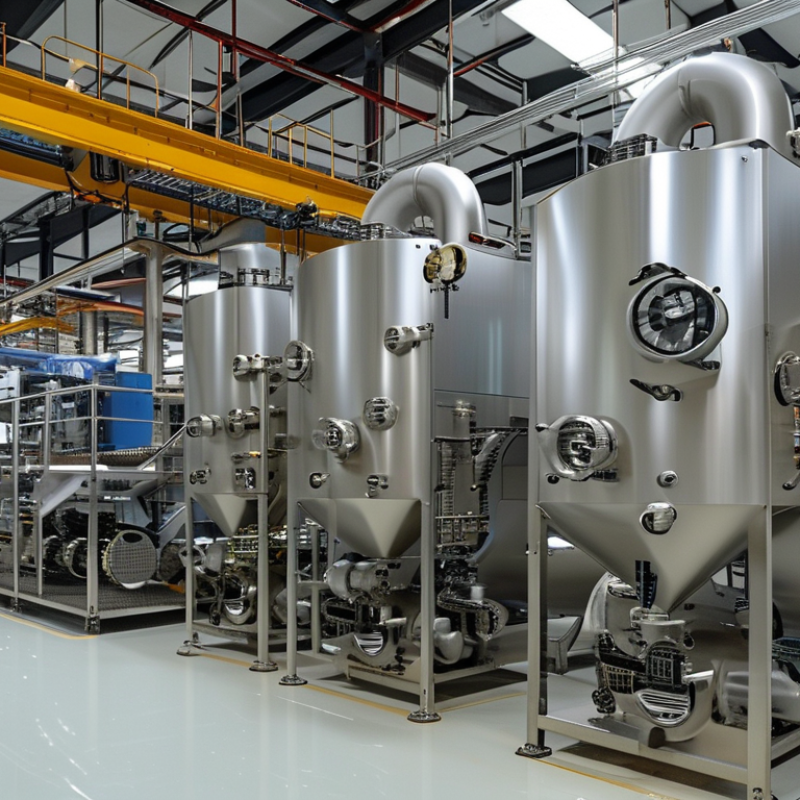
Filter dryers combine solid-liquid separation and vacuum drying in one enclosed vessel. This reduces transfer steps, exposure risk, and product loss. During filtration, the slurry enters a perforated vessel fitted with a filter plate. Liquid passes through the medium, while solids form a cake.

An agitator can level, wash, compress, and loosen the cake. The vessel then applies vacuum while heated walls or a jacket remove moisture. Lower pressure helps evaporation at gentler temperatures. This matters for heat-sensitive powders. Uniform mixing remains critical. Uneven cakes dry unevenly. A dry surface can hide wet pockets beneath it. That problem is easy to underestimate.

Tips: Check cake thickness, filter-medium compatibility, vacuum stability, and discharge design during trials. Record drying time, temperature, pressure, and residual moisture at several points. Do not rely only on the final sample. Sampling can miss localized moisture. In my experience, scale-up often changes more than expected. Larger vessels may have slower heat transfer and different mixing patterns. A careful manufacturer should provide test data, cleaning details, material certificates, and maintenance access. Buyers should also question claims that lack defined operating conditions. A clear specification is useful, but it is not proof of performance. Small pilot tests can reveal practical weaknesses before installation.

Key Specifications: 0.1–10 μm Filtration and Vacuum Below 100 mbar

Top Filter Dryer Manufacturers for Global Buyers?

For global buyers, a filter dryer should be judged by measured performance, not catalog language. The critical range is filtration from 0.1 to 10 μm. Finer filtration can improve product clarity, but it may also increase pressure drop and cleaning time. Experienced manufacturers should explain filter media, pore-size tolerance, and cake thickness. Ask for test data using a comparable slurry, not only water.

Vacuum drying below 100 mbar requires more than a powerful pump. The vessel needs reliable seals, a suitable condenser, and controlled heat transfer. At 80 mbar, residual moisture can leave slowly if the cake becomes dense. Operators should review drying curves, leakage rates, and temperature uniformity. Absolute pressure readings matter. Gauge pressure can create confusion.

Equipment geometry also affects results. A shallow cake often dries more evenly than a deep cake. However, excessive agitation may damage sensitive crystals or increase fines. This trade-off deserves pilot testing. Some specifications look impressive but lack operating context. Buyers should request filtration flux, final moisture, batch time, and cleaning evidence. Materials, surface finish, inspection records, and service support also influence long-term reliability. No design is perfect; actual process behavior can challenge laboratory assumptions.

Material and Surface Standards: 316L Stainless Steel and Ra ≤0.8 μm

For global buyers, filter dryer performance begins with material and surface control. A dependable unit should use 316L stainless steel for product-contact parts, not only for its polished exterior. This alloy offers strong corrosion resistance and supports demanding pharmaceutical, food, and chemical processes. Weld quality matters too. Orbital welds can reduce crevices, but only when operators control heat input and inspect the finished joints.

The internal surface should normally reach Ra ≤0.8 μm. A smooth wall leaves fewer places for powder, crystals, or moisture to collect. It also makes cleaning more predictable. Buyers should request measured roughness records, not vague phrases such as “mirror finish.” A calibrated profilometer report gives stronger evidence. Passivation records, material certificates, weld maps, and pressure-test documents add useful traceability.

In practice, I would inspect ports, filter supports, and discharge valves closely. These areas often hide rough edges. A borescope can reveal marks that a polished external shell conceals. Surface readings may also vary between the vessel body and welded zones. That detail deserves attention. No specification sheet can replace factory inspection, although remote video checks are still helpful. I would also question whether the quoted Ra value applies before or after polishing. This distinction is easy to miss, and it can affect cleaning results, maintenance time, and buyer confidence.

Top Filter Dryer Manufacturers for Global Buyers? Material and Surface Standards: 316L Stainless Steel and Ra ≤0.8 μm

The chart compares commonly referenced hygienic surface-finish limits expressed as maximum arithmetic average roughness (Ra). The 0.8 μm line represents the buyer acceptance ceiling stated for product-contact surfaces. ASME BPE finish values are shown as reference limits and should be confirmed against the applicable edition and purchase specification. 316L stainless steel is commonly selected for corrosion resistance and cleanability; chemical composition and surface finish should be verified separately in supplier documentation.

Global Compliance: ASME, PED, ATEX, and GMP Requirements

Top Filter Dryer Manufacturers for Global Buyers?

Global buyers should evaluate filter dryer manufacturers through compliance evidence, not polished brochures. A pressure-rated filter dryer may require ASME design or certification, depending on the destination and project specification. In Europe, the Pressure Equipment Directive, or PED, can govern design, fabrication, conformity assessment, and documentation. The exact category matters.

ATEX becomes important when equipment operates in potentially explosive atmospheres. Buyers should check ignition-risk assessments, electrical components, grounding, and protected instrumentation. ATEX marking alone is not enough. The equipment configuration must match the classified zone and process conditions. Ask for certificates, technical files, and installation limits. Small details matter.

For pharmaceutical applications, GMP expectations extend beyond clean surfaces. Manufacturers should provide material certificates, surface-finish records, weld documentation, cleaning studies, and traceability for product-contact parts. A reliable supplier also supports factory acceptance testing, site acceptance testing, and qualification documents. Inspect the agitator seal, filter plate, discharge valve, and sampling points closely. These areas often expose design weaknesses.

A strong manufacturer explains which standards apply and which do not. It should identify gaps before production begins. This is where experience becomes visible. Do not accept a generic compliance statement. Request drawings, pressure calculations, risk assessments, and validated component lists. Compliance can change with pressure, temperature, solvent properties, location, and user requirements. No supplier gets every detail right. Buyers should challenge assumptions, record deviations, and involve an independent inspector when risks remain unclear.

Top Filter Dryer Manufacturers for Global Buyers?
Global Compliance: ASME, PED, ATEX, and GMP Requirements

Use this evidence-based checklist to compare filter dryer manufacturers without relying on brand claims. Requirements can vary according to pressure, temperature, product classification, installation location, and intended use.

Compliance Area Requirement Relevant to Filter Dryers What Global Buyers Should Verify Typical Objective Evidence Purchasing Gate
Pressure-vessel design ASME Boiler and Pressure Vessel Code, Section VIII, Division 1 is commonly used for the design and construction of pressure vessels. Confirm the design code, allowable pressure, design temperature, corrosion allowance, joint efficiency, and pressure-boundary materials. Design calculations, certified drawings, material certificates, welding procedures, welder qualifications, and inspection records. Mandatory where specified
ASME certification An ASME Code stamp, such as the Section VIII “U” authorization, applies only when the manufacturer is authorized and the vessel is built under the applicable certification program. Determine whether the project needs a stamped vessel or only a vessel designed to ASME requirements. Current authorization documentation, nameplate details, Authorized Inspector involvement, and a completed Manufacturer’s Data Report when applicable. Project-dependent
EU Pressure Equipment Directive PED 2014/68/EU applies to stationary pressure equipment with a maximum allowable pressure greater than 0.5 bar. Confirm PED category, fluid group, hazard level, conformity-assessment route, and whether a notified body is required. EU Declaration of Conformity, CE marking where required, category assessment records, technical file, and notified-body certificates when applicable. Required for applicable EU units
ATEX equipment ATEX Directive 2014/34/EU covers equipment and protective systems intended for potentially explosive atmospheres. Define the hazardous-zone classification, gas or dust group, temperature class, equipment category, and ignition sources. ATEX Declaration of Conformity, equipment marking, ignition-hazard assessment, certificates for electrical components, and grounding documentation. Required in classified zones
Explosion-risk controls Filter dryers handling combustible powders or solvents may require inerting, bonding and grounding, explosion protection, and controlled oxygen levels. Verify dust explosibility data, solvent vapor risks, minimum ignition energy, maximum explosion pressure, and required protection concept. Hazardous-area assessment, process safety review, inert-gas control philosophy, pressure-relief sizing, and functional test records. Safety-critical
GMP suitability GMP expectations focus on preventing contamination, cross-contamination, mix-ups, and uncontrolled process changes; GMP is not a universal single-product certification. Check product-contact design, cleanability, drainability, containment, cleaning validation strategy, and batch traceability. User Requirement Specification, functional specifications, quality agreements, validation documentation, and change-control procedures. Required for regulated production
Materials and finish Product-contact materials should be compatible with the process, cleaning agents, temperature, pressure, and chemical exposure. Specify alloy, surface roughness, elastomer compatibility, weld quality, passivation requirements, and internal polishing standard. Material certificates, surface-finish reports, weld maps, boroscope or visual-inspection records, and passivation certificates where required. Define in URS
Filtration performance The filter medium and support design must maintain cake integrity, filtration rate, discharge performance, and product recovery. Confirm filter area, filtration flux, pressure differential, cake thickness, particle retention, and expected cycle time. Process guarantees, pilot-test results, filter-media certificates, pressure-decay data, and product-recovery test results. Performance-tested
Drying and temperature control Jacketed heating, vacuum operation, agitation, and temperature monitoring must support the required drying profile without degrading the product. Review heat-transfer area, vacuum range, temperature uniformity, agitation speed, drying endpoint, and thermal-oil or steam requirements. Heat-transfer calculations, temperature-mapping results, vacuum-leak test, control-loop calibration, and drying-cycle data. Validate by process data
Containment and operator safety Toxic, potent, sterile, or dusty products may require a closed system, contained discharge, controlled venting, and safe filter handling. Establish occupational-exposure limits, containment target, sampling method, discharge arrangement, and safe maintenance procedure. Containment strategy, pressure-boundary test, bag-in/bag-out or split-valve documentation, dust-monitoring results, and operator risk assessment. Risk-based
Validation package Regulated facilities commonly require documented design, installation, operation, and performance qualification activities. Confirm the supplier’s responsibility for FAT, SAT, IQ, OQ support, calibration, software documentation, and deviation handling. FAT protocol and report, equipment manuals, calibration certificates, test scripts, spare-parts list, and approved drawings. Contract deliverable
Documentation and traceability Complete traceability is important for pressure equipment, product-contact parts, welds, instruments, and critical replacement components. Require a document index, revision control, serial-number traceability, spare-part identification, and long-term record retention. Certified drawings, inspection and test plans, certificates of conformity, material records, calibration records, and final data book. Before shipment
International delivery readiness Exported equipment may require local electrical, pressure, customs, language, lifting, and installation documentation in addition to core product compliance. Confirm destination-country requirements, electrical voltage and frequency, local inspection needs, packaging, lifting points, and commissioning support. Country-specific compliance matrix, packing list, installation drawings, lifting calculations, translated manuals, and commissioning plan. Confirm before quotation
Buyer note: Compliance is determined by the equipment design, operating conditions, destination market, hazardous-area classification, and application. Request current certificates and project-specific evidence rather than accepting generic claims.

Comparing Manufacturers by Capacity, Automation, Validation, and Service

Choosing top filter dryer manufacturers requires more than comparing vessel volume. Capacity should match batch size, solvent behavior, cake thickness, and cleaning access. A 2024 MarketsandMarkets report projects continued growth in pharmaceutical manufacturing equipment, driven partly by automated processing and contamination control. That pressure makes scalable design important. A 50-liter pilot unit should not become a bottleneck at 2,000 liters.

Automation separates capable suppliers from merely adequate ones. Buyers should examine recipe control, torque monitoring, vacuum regulation, and electronic batch records. The ISPE Pharma 4.0 framework emphasizes data integrity, connectivity, and lifecycle thinking.

Ask for alarm histories, audit trails, and recovery procedures. More automation is not always better. Poorly integrated sensors create expensive confusion. I would test the interface with operators, not only engineers.

Validation evidence deserves equal weight. Request material certificates, weld records, FAT and SAT protocols, cleaning studies, and documented change control. The FDA process-validation guidance supports a lifecycle approach, from process design through continued verification.

Service also needs measurable proof. Check response targets, spare-part availability, remote diagnostics, and technician coverage near the operating site. Deloitte’s 2024 life sciences outlook identifies resilient supply chains and digital capabilities as major investment priorities. Yet many evaluations still rank price first. That judgment can fail after installation. Ask for anonymized performance data, realistic delivery records, and references from facilities with similar containment and production demands.