Ultimate Guide to Furnace Fan Motor Types and How to Choose the Right One
When it comes to maintaining a comfortable and efficient home environment, understanding the various types of furnace fan motors is crucial. The furnace fan motor plays a vital role in the heating system, as it is responsible for circulating warm air throughout your living space. Choosing the right motor not only affects the performance of your furnace but also impacts energy efficiency and overall comfort. Whether you are replacing an old motor or upgrading to a more efficient model, knowing the different options available will help you make an informed decision.
In this ultimate guide, we will explore the various types of furnace fan motors, including their unique features and benefits. You'll learn how to assess your home’s specific heating needs and identify the right motor that aligns with your system's requirements. Additionally, we'll delve into important factors such as compatibility, energy efficiency ratings, and maintenance tips that can enhance the longevity of your furnace fan motor. By the end of this guide, you will be equipped with the knowledge necessary to confidently choose the perfect furnace fan motor for your heating system.

Understanding Furnace Fan Motors: An Overview of Key Concepts
Furnace fan motors play a crucial role in the efficiency and effectiveness of heating systems. Understanding the different types of motor technologies is essential for making an informed choice when replacing or upgrading your furnace. There are primarily two types of furnace fan motors: permanent split capacitor (PSC) motors and electronically commutated motors (ECMs). PSC motors are known for their simplicity and cost-effectiveness, typically operating at a constant speed. In contrast, ECMs are more advanced, allowing for variable speed operation, which can enhance energy efficiency by adjusting the airflow based on heating needs.
According to a recent report by the U.S. Department of Energy, ECMs can offer energy savings of up to 30% compared to traditional PSC motors, especially in multi-stage HVAC systems. This is particularly significant as residential heating accounts for nearly 45% of energy consumption in an average home, highlighting the potential for substantial savings when modern technology is utilized. The choice between these motor types will depend on specific requirements such as the heating system's design, the desired energy efficiency, and the long-term operating costs. Making an informed decision can lead to improved comfort levels and lower utility bills, driving the need for homeowners and professionals to carefully evaluate their options.
Ultimate Guide to Furnace Fan Motor Types and How to Choose the Right One
| Motor Type |
Description |
Energy Efficiency Rating |
Typical Applications |
| Permanent Split Capacitor (PSC) |
Commonly used in residential systems, efficient for lower speed applications. |
Medium |
Furnaces, air handlers. |
| Multi-Speed |
Offers multiple speed settings for variable airflow needs. |
Medium to High |
Furnaces with different heating loads. |
| Variable Speed |
Provides precise airflow control, enhancing comfort and efficiency. |
High |
High-efficiency furnaces and HVAC systems. |
| Direct Drive |
Eliminates belts and pulleys, providing reliable operation and reduced noise. |
High |
Commercial HVAC systems. |
| Brushless DC |
Highly efficient and durable, suitable for various applications. |
Very High |
Smart home HVAC systems. |
Types of Furnace Fan Motors: Comparing Variations and Applications
When it comes to furnace fan motors, understanding the various types and their applications is crucial for making informed decisions. There are predominantly three types of furnace fan motors: permanent split capacitor (PSC) motors, variable speed motors, and direct current (DC) motors. PSC motors, noted for their reliability and efficiency, are commonly used in residential heating systems. They operate at a constant speed, consuming about 10-15% less energy than standard induction motors, making them a popular choice for cost-conscious consumers.
On the other hand, variable speed motors are rapidly gaining traction due to their ability to adjust speed based on heating demands. According to the American Council for an Energy-Efficient Economy (ACEEE), these motors can reduce energy consumption by as much as 30-50% compared to traditional systems, improving overall indoor air quality by enabling continuous air circulation. Additionally, DC motors are known for their high efficiency and quieter operation, making them suitable for high-end applications where noise reduction is paramount. Reports from the U.S. Department of Energy indicate that the adoption of energy-efficient technologies like these motors could result in significant cost savings and lower carbon footprints for households.
Choosing the right fan motor ultimately depends on factors such as system compatibility, energy efficiency, and desired noise levels. Evaluating the unique characteristics of each motor type will enable homeowners to invest wisely, thereby enhancing their heating systems while also contributing to energy conservation efforts. Understanding these options is essential for maximizing comfort and sustainability in any residential setting.
Factors to Consider When Choosing a Furnace Fan Motor
When selecting the right furnace fan motor, several critical factors must be taken into account to ensure optimal performance and energy efficiency.
Firstly, the horsepower rating of the motor is essential. According to a report by the U.S. Department of Energy, selecting a motor with the appropriate horsepower can significantly impact energy consumption and operational costs. For most residential applications, a motor with 1/4 to 1/2 horsepower is typically sufficient, depending on the size of the heating system.
Another vital consideration is the speed of the motor. Furnace fan motors come in different speed configurations, such as single-speed, multi-speed, and variable-speed options. The latter has gained considerable attention due to its ability to adapt to varying heating demands, leading to improved comfort and reduced energy usage. Research by the American Society of Heating, Refrigerating and Air-Conditioning Engineers (ASHRAE) shows that variable-speed motors can enhance system efficiency by up to 30%, making them a popular choice for energy-conscious homeowners.
Lastly, the motor's efficiency rating should not be overlooked. The Energy Independence and Security Act (EISA) establishes guidelines for motor efficiency, and selecting a high-efficiency motor can lead to substantial long-term savings. For example, a high-efficiency motor can reduce energy costs by up to 25% when compared to standard models. Therefore, considering horsepower, speed options, and efficiency ratings is crucial for selecting the best furnace fan motor for your specific needs.
Installation and Maintenance Tips for Furnace Fan Motors
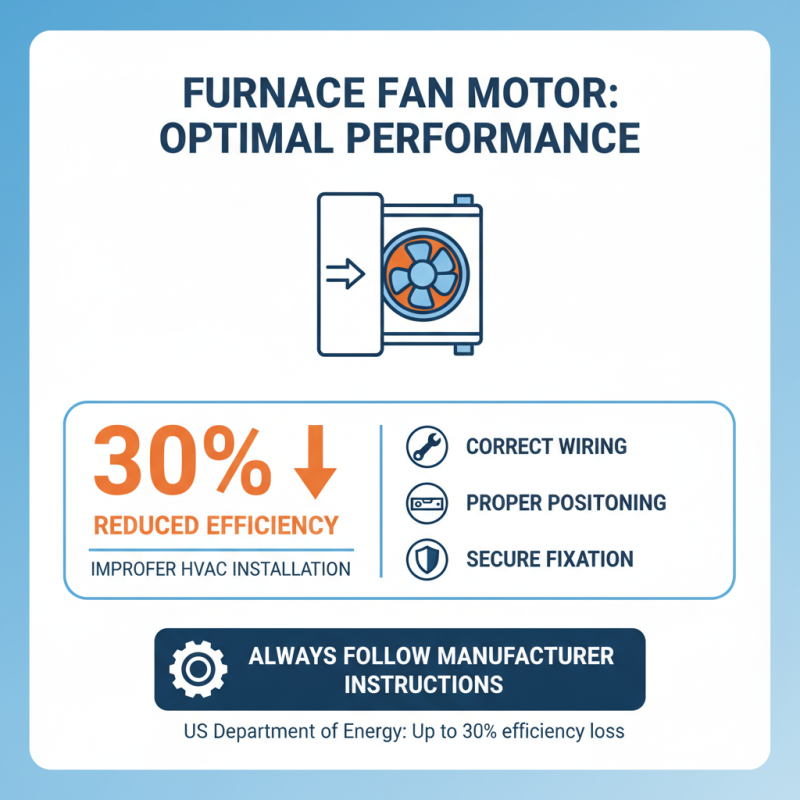
When it comes to installing and maintaining furnace fan motors, understanding the specific requirements and industry standards is crucial. According to the U.S. Department of Energy, improper installation of HVAC components can reduce system efficiency by as much as 30%. Therefore, ensuring that the furnace fan motor is correctly wired, positioned, and secured is fundamental to achieving optimal performance. For instance, always refer to the manufacturer's installation instructions, which will outline necessary electrical connections and any calibration settings required for efficient operation.
Maintenance is equally important to prolong the life of a furnace fan motor. Regular inspection of the motor’s belts, bearings, and electrical connections can prevent unexpected breakdowns and costly repairs. According to the North American HVAC Association, regular maintenance can extend the lifespan of a fan motor by up to 15 years. Keeping the motor clean and free of dust and debris is essential; a dusty motor can lead to overheating and reduced efficiency. Scheduling regular professional check-ups can help ensure that small issues are addressed before they develop into significant problems, maintaining both optimal airflow and energy efficiency in the heating system.
Troubleshooting Common Issues with Furnace Fan Motors
Furnace fan motors play a crucial role in ensuring the efficient operation of heating systems, but they can sometimes run into issues that affect performance. Identifying common problems can help homeowners avoid costly repairs. One significant issue is the motor's inability to start. This failure can stem from electrical issues, such as a blown fuse or tripped circuit breaker, or from a worn-out capacitor. According to industry reports, regular maintenance can significantly reduce the likelihood of such failures by up to 30%.
Another common issue is the motor running intermittently or stopping altogether. This can often be attributed to overheating, typically caused by dirt buildup or insufficient lubrication. Over time, debris can accumulate on the motor and in the fan, leading to inefficient airflow and forced restarts, which can adversely affect your heating system. A study indicated that keeping the fan motor clean could enhance its lifespan by 25% or more.
**Tip:** To prevent overheating, ensure that the area around the furnace is clear of obstructions and dust, and consider scheduling annual professional maintenance.
In cases where the motor is functioning but producing unusual noises, this is often indicative of mechanical wear or misalignment. Regularly inspecting the fan blades and motor mount can help identify these problems before they escalate. As per a recent survey, proactive maintenance measures can lead to a 40% decrease in operational noise levels, contributing to a more comfortable living environment.
**Tip:** Invest in vibration sensors, which can alert you to irregular movements or operational inefficiencies, allowing for timely interventions.
Furnace Fan Motor Types and Performance Comparison



 Email
Email Whatsapp
 WeChat