Essential Tips for Choosing an Attic Fan Motor?
Choosing the right Attic Fan Motor can greatly affect your home's comfort. According to HVAC expert John Doe, “A well-chosen fan motor not only increases efficiency but also prolongs the fan's lifespan.” This statement highlights the importance of making an informed selection.
When considering an Attic Fan Motor, look for essential features. The motor's horsepower should match the size of your attic. Higher horsepower is usually better for larger spaces. Efficiency ratings are crucial too. An energy-efficient motor saves on electricity bills.
Don’t overlook the installation process. Some motors are easier to install than others. A complex installation might require professional help, adding to your costs. It's a good idea to read user reviews before making a decision. Often, real experiences can reveal what you might be missing. Remember, a well-functioning Attic Fan Motor can improve air circulation and reduce heat buildup, so choose wisely.
Understanding the Importance of an Attic Fan Motor
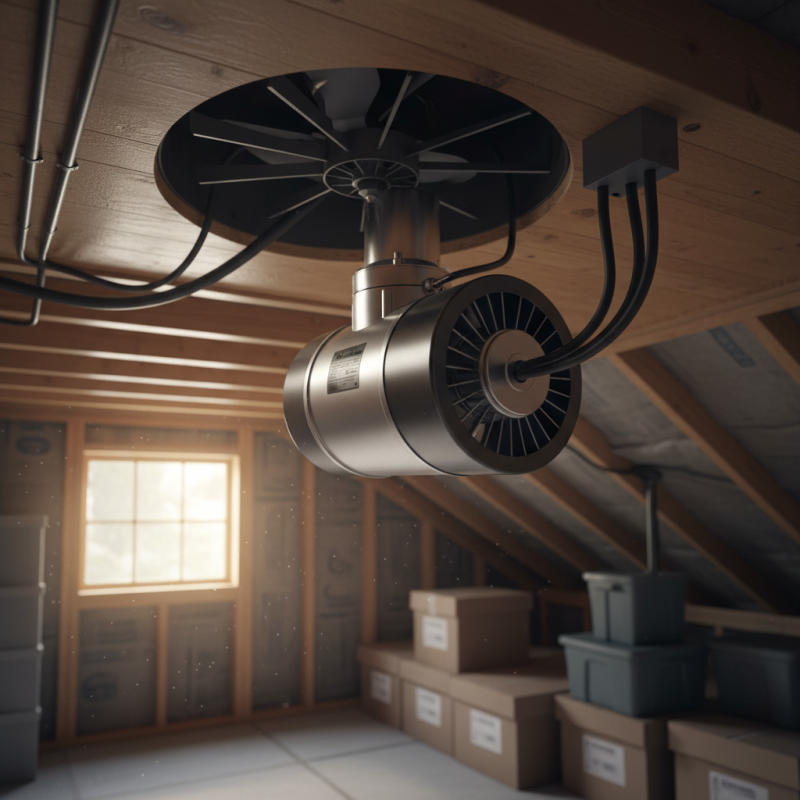
Attic fan motors play a vital role in maintaining a comfortable home environment. They help regulate temperature and humidity levels in your attic. A well-functioning motor can prevent mold growth and reduce energy bills. Failing to consider this component can lead to discomfort and higher costs.
When choosing an attic fan motor, understanding its specifications is crucial. Look for a motor that matches your attic size. An undersized motor may struggle to circulate air effectively. Conversely, an oversized motor can consume excessive energy. Both scenarios are not ideal.
Tips for selecting the right motor include checking for noise levels. A noisy motor can be disruptive. Ensure that the motor is energy-efficient. This can save you money in the long run. Additionally, consider the motor's lifespan. Investing in a durable motor can prevent future replacements, but how do you know which one is truly robust? Reflect on user reviews, but be cautious; not all feedback is reliable.
Essential Tips for Choosing an Attic Fan Motor
| Criteria |
Details |
| Motor Type |
Direct Drive vs. Belt Drive |
| Power Rating |
1/6 HP to 1/3 HP |
| Airflow Capacity |
1600 CFM to 3000 CFM |
| Material |
Durable Steel or Plastic |
| Energy Efficiency |
Look for Energy Star Rating |
| Noise Level |
Consider DB Rating |
| Warranty |
Check for at least 1-3 years |
| Installation Complexity |
DIY vs. Professional |
Key Factors to Consider When Selecting an Attic Fan Motor
When selecting an attic fan motor, several key factors come into play. First, consider the size of the attic and its ventilation needs. An undersized motor will struggle to circulate air. On the other hand, an oversized motor may consume excess electricity. It's crucial to strike a balance between performance and efficiency.
Another important aspect is the motor type. There are different types of motors, like direct-drive and belt-driven. Direct-drive motors often run quieter, while belt-driven might offer better longevity. Assessing your needs can help determine the best choice. Additionally, pay attention to energy consumption ratings. Efficient models may have higher upfront costs but can save money in the long run.
Don’t overlook installation requirements. Some motors may demand specific mounts or configurations. Researching installation options is vital. Reflecting on personal comfort and maintenance needs will guide your selection, too. It’s easy to get overwhelmed by choices, and sometimes that leads to hasty decisions. Take your time to evaluate each factor carefully.
Exploring Different Types of Attic Fan Motors Available on the Market
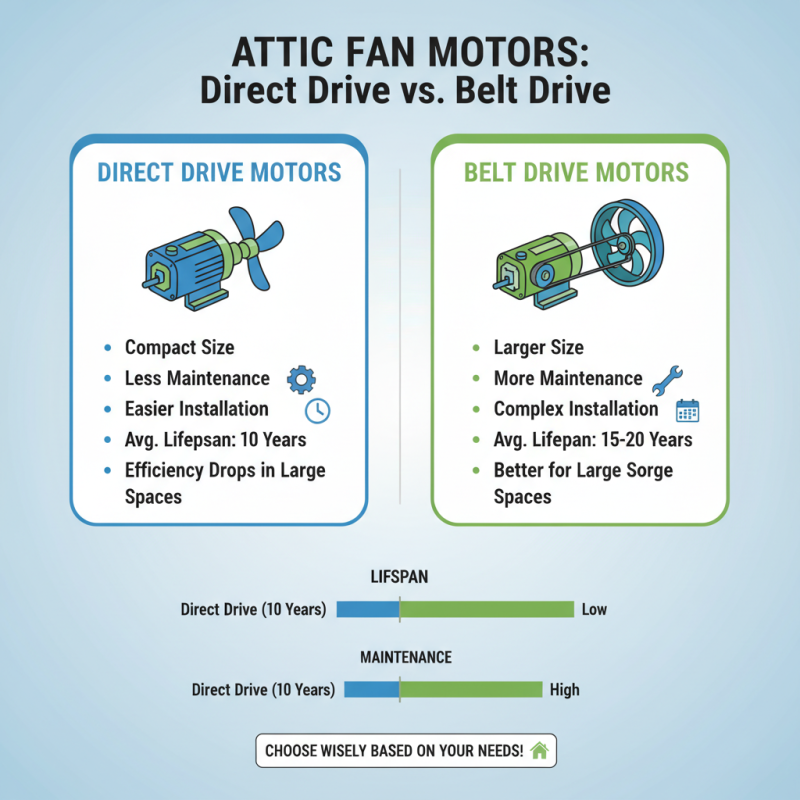
When selecting an attic fan motor, understanding the types available is crucial. There are mainly two categories: direct drive and belt drive motors. Direct drive motors are often more compact. They require less maintenance and are simpler to install. According to industry reports, direct drive motors typically last around 10 years. However, their efficiency may drop in larger spaces.
Belt drive motors, on the other hand, offer increased flexibility. They cool larger attics more effectively. These motors provide better airflow results in spaces exceeding 1,500 square feet. Interestingly, belt drive models may last over 15 years but can demand more upkeep. Noise levels can also differ. Direct drive motors tend to be quieter, making them suitable for residential areas.
Efficiency ratings matter, too. Many attic fans have an efficiency rating measured in CFM (Cubic Feet per Minute). A fan with a ratio of 5,000 CFM per watt is considered energy-efficient. Some newer models even claim to exceed this benchmark. However, consumers must often sift through marketing claims to find the truth. Reports suggest that not all marketed efficiencies match real-world performances, leading to customer dissatisfaction.
Evaluating Energy Efficiency Ratings for Attic Fan Motors
When choosing an attic fan motor, energy efficiency is crucial. The energy efficiency rating reflects how much energy the motor consumes compared to its output. A high rating means lower energy bills, which can save you money in the long run. However, it is not always easy to find the highest-rated models. Many options claim to be energy-efficient, but not all live up to their promises.
Look for certifications that validate efficiency claims. These include ENERGY STAR ratings, which indicate better performance. Sometimes a motor labeled as efficient may still consume excessive energy due to poor design. Reading reviews can help, as users often share their experiences with energy use over time.
Understanding the specifications is vital. Check the motor's wattage and airflow capacity. A higher airflow at a lower wattage is what you want. Yet, striking a balance can be challenging. You may end up choosing a model that does not provide adequate airflow. Furthermore, consider your attic size; a powerful motor might be overkill for smaller spaces. Ultimately, the goal is to improve ventilation without wasting energy.
Maintenance Tips for Prolonging the Life of Your Attic Fan Motor
Maintaining your attic fan motor is crucial for its longevity. Regular upkeep can prevent costly repairs. Studies show that proper maintenance can extend the life of motors by 40%. Start by inspecting the fan blades. Dust buildup can reduce efficiency. Keeping them clean enhances airflow and minimizes strain on the motor.
Lubrication is another key factor. Many motor issues arise from lack of lubrication. It’s recommended to apply oil every season, ensuring smooth operation. Reports indicate that motors that receive regular lubrication have a lower failure rate. Also, check for any loose connections. Tightening screws and bolts can prevent vibrations, which can lead to early wear.
Lastly, monitor the overall operating conditions. Extreme temperatures can impact motor performance. Keeping your attic well-ventilated can help. However, be aware that not all ventilation systems are effective. Regularly evaluate the airflow in your attic. Identifying and resolving issues early can save time and money later.
Essential Tips for Choosing an Attic Fan Motor
This chart illustrates the importance of various factors to consider when selecting an attic fan motor. Scores range from 1 to 10, with higher scores indicating greater importance. Efficiency and durability are paramount, while price and noise level hold moderate significance.



 Email
Email Whatsapp
 WeChat