

Choosing the right Air Dryer Filter can seem daunting. With a wide variety of options, how do you know what to pick? According to industry expert John Smith, "The right filter makes all the difference in maintaining efficiency and longevity." This advice emphasizes the importance of understanding your specific needs when selecting an Air Dryer Filter.
Different applications require different filtration levels. High-pressure systems, for example, demand filters that can handle more stress. Meanwhile, a simple workshop might suffice with a basic filter. Remember that not all filters are created equal. Some may promise efficiency but lack durability. It's crucial to consider both performance and reliability.
When making your choice, don't ignore your environment. Factors like humidity and temperature play significant roles. The right Air Dryer Filter can protect your equipment, but choosing poorly can lead to costly failures. Always stay informed and keep an eye on industry developments. Your choice matters more than you think.
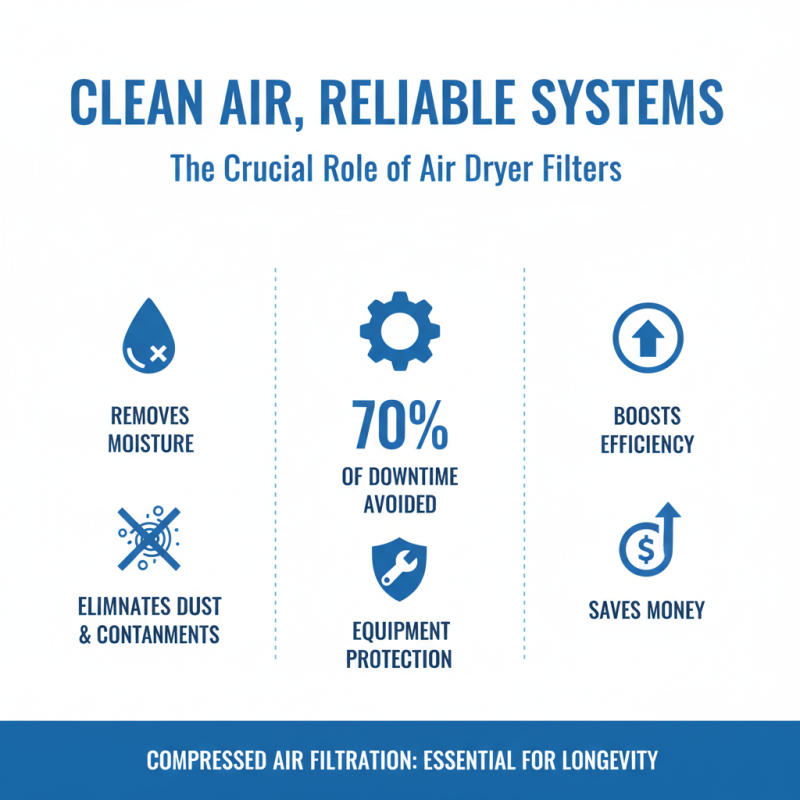
Air dryer filters play a critical role in maintaining the efficiency of compressed air systems. These filters remove moisture, dust, and contaminants that can harm equipment. According to the Compressed Air and Gas Institute, about 70% of operational downtime is linked to contaminated air systems. This highlights the importance of proper filtration.
Understanding your specific needs is essential. Different applications require various filtration levels. For example, food and pharmaceutical industries may need stricter standards to ensure product purity. Choosing the right filter can significantly enhance system reliability and reduce maintenance costs. Industry data shows that high-quality air filters can extend the life of compressors by up to 30%.
However, not all filters are created equal. Some users may overlook the need for regular maintenance and replacement. This neglect can lead to increased energy costs and system failures. A poorly maintained filter can increase the energy consumption of air compressors by 10%. Evaluating your system's demands and addressing them can greatly improve efficiency and performance.
When selecting an air dryer filter, understanding the types available is crucial. Desiccant filters, for example, excel in removing moisture from compressed air. They use hygroscopic materials to absorb water vapor. These filters are ideal for applications requiring low humidity levels.
Coalescing filters operate differently. They capture liquid water and particles by using specially designed elements. As air flows through, water droplets coalesce and are removed, maintaining clean air systems. These filters work well in environments where oil contamination is a concern.
Other filters, like particulate filters, prevent solid particles from entering the system. They can be essential in protecting sensitive equipment. An often overlooked factor is the filter's lifespan. Regular maintenance and timely replacements significantly impact filter efficiency. Choosing the right filter involves weighing these aspects carefully without overlooking specific needs.
| Filter Type | Description | Applications | Pros | Cons |
|---|---|---|---|---|
| Desiccant Filters | Utilize moisture-absorbing materials to remove humidity from compressed air. | Drying air for pneumatic tools, spray painting, and food processing. | High moisture removal efficiency, suitable for low-temperature applications. | Needs regular replacement of desiccant, can be costly over time. |
| Coalescing Filters | Capture liquid water and oil by coalescing them into larger droplets that can be removed. | Air quality improvement in painting, food and pharmaceutical industries. | Removes oil vapors and provides clean air, less frequent maintenance. | Limited moisture removal capability, can clog if not maintained. |
| Particulate Filters | Designed to trap particles, dust, and debris from compressed air. | General air treatment for tools, machinery, and processes sensitive to particulates. | Cost-effective, improves overall air quality. | Does not remove moisture or oil, needs regular changing to prevent blockage. |
| Aftercoolers | Cooling devices that reduce the temperature of compressed air before filtration. | Used in conjunction with other filters to enhance performance. | Reduces moisture load on filters, potentially increases filter lifespan. | Adds complexity to the system, may require additional maintenance. |
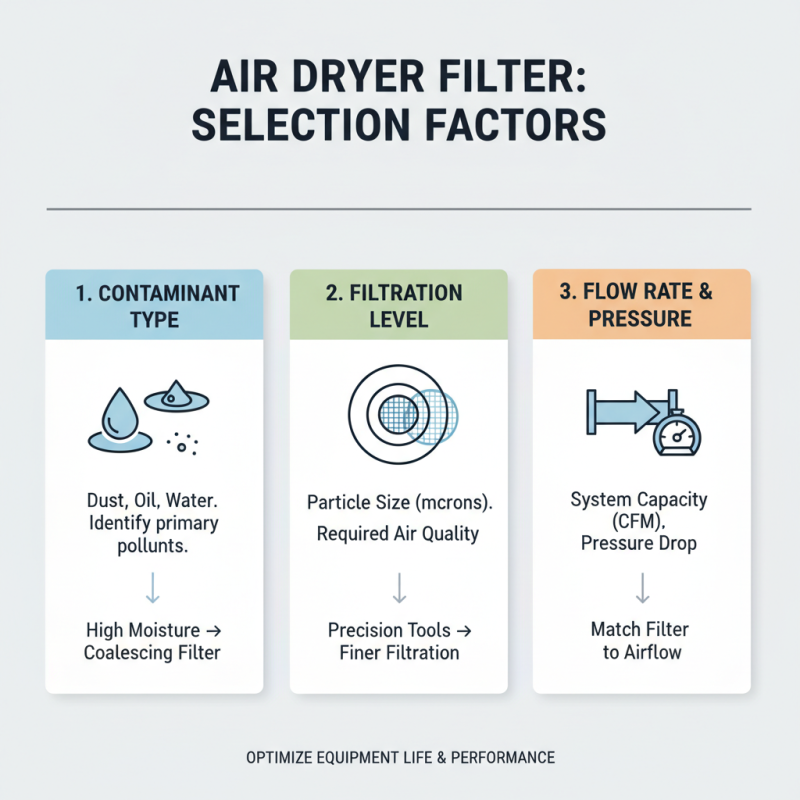
Choosing the right air dryer filter involves several key factors. The first consideration is the type of contaminants in your air supply. Dust, oil, and water can cause damage to equipment. Knowing what you need to filter out is crucial. For instance, if your system has high moisture levels, a coalescing filter may be essential.
Next, consider the filter's capacity and flow rate. Each filter has a specific capacity to handle air volume. If you select one that is too small, it can clog quickly. This can lead to increased maintenance costs and unscheduled downtimes. It's essential to balance efficiency with size.
Don't forget to evaluate the filter’s lifespan and replacement frequency. Some filters require replacements more often, while others are long-lasting. This can impact your overall operating budget. It might be tempting to choose a cheaper option, but you might pay more in the long run. Think about performance versus cost. Reflecting on these factors can lead to better decisions.
When selecting air dryer filters, understanding industry standards and certifications is crucial. Various certifications can indicate the filter's quality and effectiveness. Common standards include ISO, ASTM, and ASHRAE. These organizations set rigorous testing protocols. Filters meeting these standards show reliability in performance.
Ensuring your filter meets industry certifications involves examining third-party test results. Certifications like ISO 8573 define air quality requirements. This standard highlights acceptable levels of contaminants. Compliance suggests a filter is capable of delivering clean air consistently. However, not all filters proudly display these certifications. Some may lack transparency in their testing processes.
Being informed about these specifications aids in making an educated choice. A filter lacking certification does not necessarily mean it's inferior, but quality assurance is uncertain. Knowing the differences helps you weigh options. Look for filters with clear documentation and visible industry standards. Your selection reflects on the overall efficiency of your air system. It's wise to invest time in this research for the best outcomes.
Maintaining and replacing air dryer filters is crucial for optimal performance. Dirty filters can reduce airflow and lead to equipment failure. According to industry reports, air compressor systems lose about 20% efficiency due to clogged filters. Regular inspection is essential. Schedule filter checks every 1,500 operational hours or more frequently in dusty environments.
Remember, different applications require different filter types. For instance, coalescing filters are ideal for removing water and particulates. Using the wrong filter can result in performance issues. It's important to match filter specifications with your system's requirements.
Tip: Keep a log of filter replacement dates. This can help establish a maintenance routine. Also, consider purchasing spare filters to avoid downtime during replacements. Regular maintenance can extend the lifespan of your air dryer system. Neglecting maintenance will inevitably lead to higher costs and unforeseen issues.