How to Choose the Right Furnace Motor for Your Home?
Choosing the right furnace motor is essential for your home's heating system. A furnace motor plays a vital role in ensuring efficient airflow and maintaining a comfortable temperature. It affects energy consumption, longevity, and overall performance of your heating unit.
When selecting a furnace motor, you should consider several factors. Think about the size of your home, the type of furnace you have, and its efficiency rating. A motor that is too powerful may lead to increased energy costs. On the other hand, a motor that is too weak may not effectively heat your space. This balance can be tricky.
Additionally, reflect on compatibility with your existing system. An improper fit can lead to inefficiencies and costly repairs. Pay attention to details like voltage and motor speed. The right choice can enhance performance, while the wrong one can create frustration. Investing time in research may seem daunting, but the right furnace motor can make all the difference.
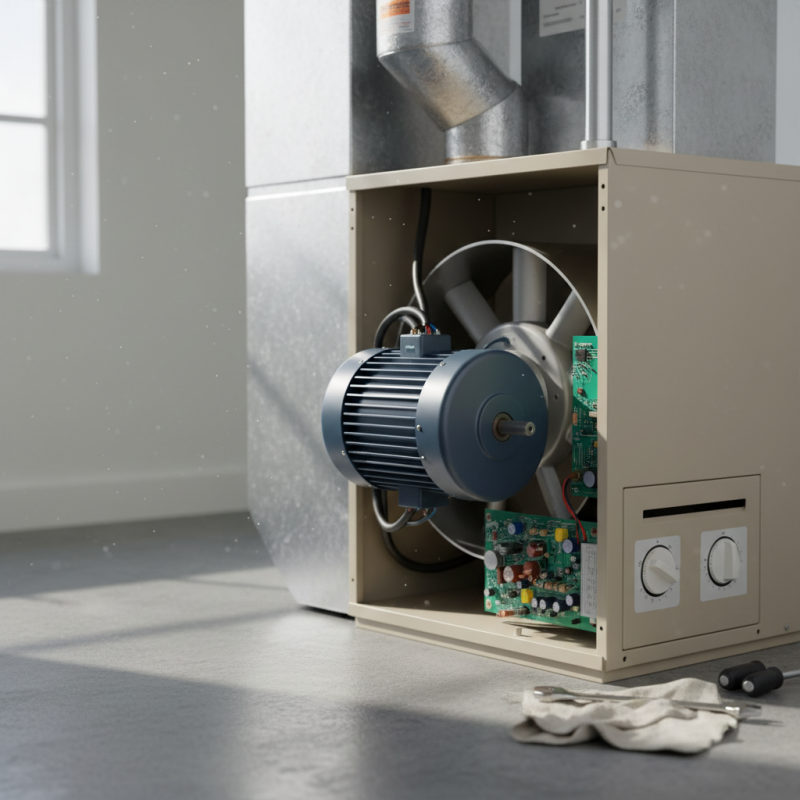
Understanding Furnace Motor Types: Single-Speed vs. Variable-Speed
When selecting a furnace motor, understanding the differences between single-speed and variable-speed options is crucial. Single-speed motors operate at a fixed speed. These models are often less expensive and simpler to install. However, they can be inefficient, as they run at full power even when full heating isn't necessary. This can lead to higher energy bills. According to the U.S. Department of Energy, homes with single-speed motors may see energy costs increase by up to 30% under certain conditions.
On the other hand, variable-speed motors adjust their speed according to heating needs. This flexibility can lead to improved energy efficiency and comfort. Studies show that homes with variable-speed motors experience fewer temperature fluctuations. They can run at lower speeds, maintaining a consistent temperature while using less energy. The Environmental Protection Agency notes that energy savings can reach 10-40%, depending on usage. However, variable-speed systems can have higher upfront costs and more complex installation requirements. This can be a hurdle for some homeowners, prompting reflection on long-term savings versus initial investments.
Key Considerations for Sizing a Furnace Motor in Residential Applications
Choosing the right furnace motor requires careful consideration of several factors.
Sizing is crucial for efficient operation. An undersized motor may struggle to heat your home adequately.
This leads to higher energy consumption and potential overheating issues. Conversely, an oversized motor can create excessive noise and rapid cycling, which shortens its lifespan.
When sizing a furnace motor, consider the square footage of your home. Larger spaces require more power. You should also evaluate your home's insulation.
Poorly insulated homes need a more powerful motor to maintain comfort. Additionally, check the airflow requirements of your heating system.
Improper airflow can affect performance, making it important to consult a professional for guidance.
Keep in mind that not all motors are created equal. You may feel uncertain about your choice. Researching different specifications helps, but it can be overwhelming.
Errors can lead to costly replacements. Consider seeking advice from experts or using online calculators.
This approach can help clarify your options and lead to a more informed decision. Each home is unique, so trust your instincts while also being open to learning more about your specific needs.
Evaluating Efficiency Ratings: ECM Motors vs. PSC Motors Explained
When choosing a furnace motor, understanding the efficiency ratings is crucial. ECM (Electronically Commutated Motor) and PSC (Permanent Split Capacitor) motors are two popular options. ECM motors adjust their speed to match heating needs. This can lead to significant energy savings. In contrast, PSC motors operate at a constant speed. They may be easier to install but often consume more energy.
Tips for selecting a motor include evaluating your home specifications. Consider heating needs, ductwork layout, and existing system compatibility. High-efficiency motors may come with higher upfront costs. However, the long-term savings on utility bills can be worth the investment.
In many cases, the choice between ECM and PSC motors isn’t clear-cut. It’s essential to weigh performance against cost. Sometimes, the average homeowner might overlook future benefits. A well-informed decision today can lead to comfort tomorrow. Consider consulting with HVAC professionals for personalized advice. They can provide valuable insights that go beyond basic features.
Furnace Motor Efficiency Comparison
This chart compares the efficiency ratings of ECM and PSC motors, highlighting the significant difference in performance. ECM motors typically offer higher efficiency compared to PSC motors, making them a more energy-efficient choice for home heating systems.
How Climate and Home Size Affect Furnace Motor Selection
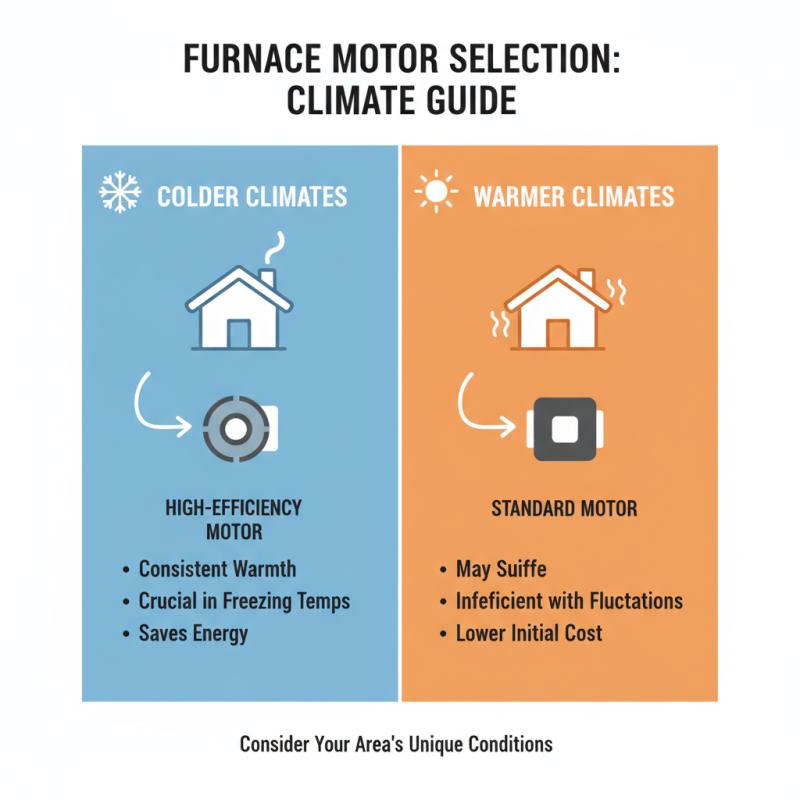
When selecting a furnace motor, climate plays a crucial role. In colder regions, a high-efficiency motor is vital. These motors maintain consistent warmth, even in freezing temperatures. In warmer climates, a standard motor may suffice. Yet, fluctuations in temperature can lead to inefficiencies. You'll want to consider the unique conditions of your area before finalizing a choice.
Home size is another important factor. A small home with high ceilings requires a different motor than a sprawling space with many rooms. A motor that is too powerful can waste energy. Conversely, an undersized motor may struggle to maintain comfort. Assessing your home's floor plan can provide insights. Ensure that you balance the motor's capability with the actual needs of your space. A careful evaluation can prevent future regrets.
Maintenance Tips for Extending the Lifespan of Your Furnace Motor
Maintaining your furnace motor is crucial for maximizing its lifespan.
Regular cleaning is essential. Dust and debris can accumulate and hinder performance.
Check the motor regularly. If you notice dirt buildup, use a soft brush to clean it gently.
Remember, neglecting this can lead to overheating issues.
Lubrication is another key aspect of maintenance. Most furnace motors require oiling.
Apply a few drops of oil to the designated points. This helps reduce friction and wear.
Don't overdo it; too much oil can attract dust.
Keep an eye on motor performance. Unusual noises may indicate a need for attention.
Finally, ensure adequate airflow to the furnace motor. Blockages can lead to overheating.
Inspect vents and ducts frequently. If you find any restrictions, clear them away immediately.
It’s easy to overlook these simple tasks, yet they are vital. A little care goes a long way.



 Email
Email Whatsapp
 WeChat