Best Bathroom Fan Motor Options for Your Needs?
When it comes to maintaining a fresh atmosphere in your home, the bathroom fan motor plays a crucial role. A good motor ensures effective ventilation, keeping humidity and odors at bay. However, not all bathroom fan motors are created equal. Some may not provide enough airflow, while others can be have a frustratingly loud operation.
Choosing the right bathroom fan motor involves understanding your specific needs. For instance, consider the size of your bathroom and the usual moisture levels. Some fans excel in small spaces, while others are designed for larger areas. You'll want a motor that balances efficiency, noise level, and durability.
Investing time in finding the right bathroom fan motor can lead to significant improvements in air quality. Even minor mistakes, like underestimating the necessary power, can lead to regrets later. It's essential to reflect on what matters most: efficient operation versus quiet performance. Your choice can make all the difference in your bathroom experience.
Factors to Consider When Choosing a Bathroom Fan Motor
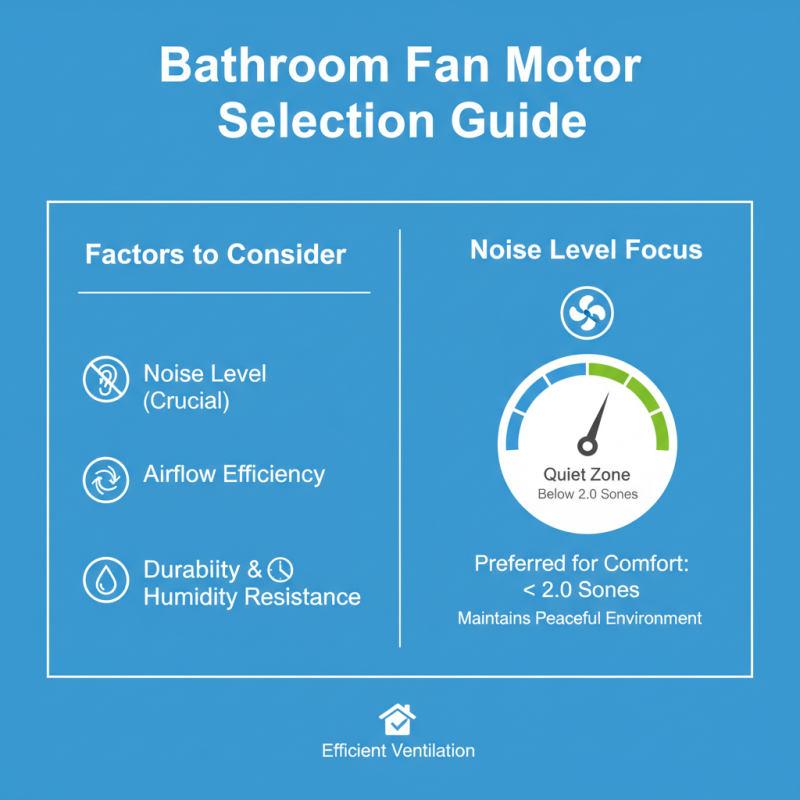
When selecting a bathroom fan motor, various factors come into play. Noise levels are crucial. Many users prefer quieter models for comfort. A report indicates that bathroom fan motors with a noise level below 2.0 sones are popular. These models help maintain a peaceful environment while efficiently ventilating the space.
Another key factor is the fan's airflow capacity. The recommended airflow for bathrooms ranges from 50 to 100 CFM (cubic feet per minute). Larger bathrooms may require fans on the higher end of this scale. Users often underestimate the importance of this metric. Insufficient airflow can lead to moisture buildup. This can encourage mold growth and damage finishes over time.
Energy efficiency is also vital. Choose motors with Energy Star ratings. They can save up to 70% in energy consumption over traditional models. This investment pays off in the long run. However, many consumers overlook this aspect, opting for cheaper alternatives that may fail prematurely. Balancing cost, performance, and efficiency is essential for making the right choice.
Types of Bathroom Fan Motors Available on the Market
When exploring bathroom fan motors, it’s crucial to understand the different types available today. The most common are centrifugal and axial motors.
Centrifugal motors are efficient for larger bathrooms. They move air in a radial direction, effectively reducing humidity and odors. Studies suggest they can remove air at a rate of 70-130 CFM (cubic feet per minute), depending on the size and installation.
Axial motors, on the other hand, are designed for smaller spaces. They operate by pulling air in and pushing it out along the same axis. While they are quieter, their airflow rate typically hovers around 50-100 CFM. It's important to consider the fan’s noise level too. The fan’s Sone rating, which measures noise, can range from less than 1 to over 4. A higher Sone rating means a louder fan, which may not be suitable for intimate bathroom settings.
Installation can be tricky. Many homeowners underestimate the importance of correct positioning. Improper placement can hinder performance. Sometimes, a motor may not suit the ductwork installed, leading to inefficiency. Review the CFM requirements based on room size before making a choice. Understanding your space and requirements can lead to a more effective ventilation solution.
Evaluating Noise Levels of Bathroom Fan Motors
When choosing a bathroom fan motor, noise levels often take center stage. A quiet motor can make a significant difference in your bathroom environment. For many, a low decibel rating is essential. However, finding the right balance can be tricky. Some ultra-quiet fans may sacrifice airflow. Think about what matters most for your bathroom.
Consider where the fan will be installed. A fan located near bedrooms should be quieter than one situated in a laundry room. Also, look for motors with noise ratings under 50 decibels. This level ensures a peaceful experience, especially when unwinding in a hot shower. But don't forget airflow; you need a fan that can adequately ventilate the space.
Tip: Always check user reviews. They'll offer insights about noise levels. You may find that some models sound quieter than their specifications suggest. Additionally, installation plays a role. A poorly mounted fan may rattle more than one installed correctly. Ensure it is secure.
Think about your bathroom size. Larger spaces may need a more powerful motor, which can be noisier. You might have to compromise on sound for efficiency. Remember that the right bathroom fan motor can provide comfort and ventilation, but it’s essential to consider your personal tolerance for noise during installation.
Noise Levels of Bathroom Fan Motors
Energy Efficiency Ratings: What You Need to Know
When choosing a bathroom fan motor, energy efficiency is crucial. Different motors come with various energy efficiency ratings. A higher rating often means lower electricity bills. It’s wise to look for fans that operate quietly while using less energy. A fan's efficiency directly impacts its performance and your comfort.
Consider the size of your bathroom. A small space benefits from a compact motor. However, larger bathrooms need stronger airflow. It's not just about the motor’s power but also how it's designed to work. Fans that are too powerful can be noisy and waste energy. This imbalance can lead to frustration.
Remember to check the fan’s wattage. Some motors consume more power than others. This discrepancy can be surprising when the bills arrive. Efficiency ratings can guide you, but it's essential to evaluate your specific needs. Be mindful of how often you use the fan. More use means higher energy consumption. Finding that balance can be challenging yet rewarding.
Top Recommended Brands for Bathroom Fan Motors
When choosing a bathroom fan motor, it's essential to find the right fit. Many brands offer a wide range of options. Each brand has its unique strengths and weaknesses. Some focus on energy efficiency, while others emphasize noise reduction. It's crucial to think about your specific needs.
Installation can sometimes be tricky. Some motors are easy to install, while others require professional help. This can affect your final decision. Noise levels vary between models. Some motors might be whisper-quiet, while others can be quite loud. Not everyone will notice the difference, but in a small bathroom, it can matter a lot.
In addition to performance, customer support is another factor to consider. Some brands offer excellent warranties and help guides. Others may leave you in the dark if problems arise. Reading user reviews can provide insight into real-world performance. This can help you avoid potential pitfalls. Remember, it's about finding a balance that works for you. You might learn more by trial and error as well.



 Email
Email Whatsapp
 WeChat